


We’ve Forgotten How to Be Bored.
Boredom used to be so ordinary. It showed up in line at the store, in the waiting room, or just in the quiet hours when nothing was planned. It was built into our day-to-day life.
Today, most people treat it as something to escape, whether that's a conscious choice or not. And there's so many ways to do that. But that bored, under-stimulated, empty and open state is often where real creativity begins. It gives the mind the space and time it needs to generate its own complex thoughts and ideas.
When the mind is not being constantly fed, it begins to imagine its own material. It wanders beautifully. It connects things that aren't obvious. It sits with half-formed ideas long enough for them to become something real. Most original thoughts, inventions, and works of art do not arrive in a state of high distraction or even productivity. They arrive in the gaps.
This is a quiet loss of the technological/AI age we live in. We have certainly gained speed and convenience, but are continually removing the conditions that once made a certain kind of creative thinking possible.
This is Not a New Problem
What’s interesting is that none of this is a new idea. People have been wrestling with the value of sitting alone, slowing down, and remaining present for thousands of years. The distractions were different and the technology was different, but the underlying question has stayed remarkably the same: how should we live if we want the best quality of mind, and the deepest presence?
Things have changed rapidly since the arrival of the internet and now AI. We absolutely overdo it. Its easy to forget what matters. And theres a constant pressure because everyone else is doing it, and we fear we’ll be left out or left behind if we don't.
The human tendency to consume and distract ourselves from reality is not new. What is new is how frictionless and constant the escape has become. And besides just distracting ourselves, we’ve also begun to over-use tools (such as AI) to outsource and maximize our processes that used to take slow, deliberate thought.
Where are We Now, and Where are We Headed?
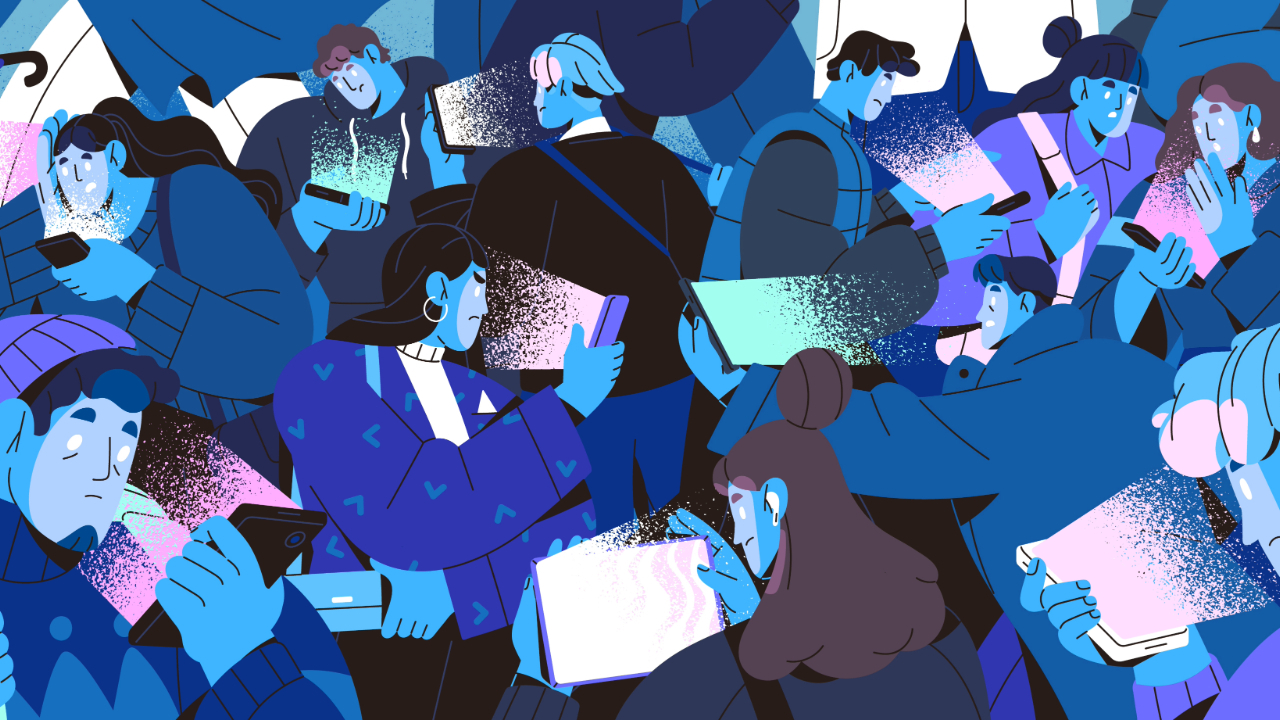
We live inside an environment designed to eliminate any empty space. Waiting in line becomes scrolling, 15 minutes of silence becomes another podcast. The default setting of modern life is continuous partial attention.
At the same time, we have become obsessed with efficiency. Everything is about more, and faster. We treat time as a resource to be maximized and “saved.” The unspoken assumption is simple: if we can do everything faster, we will end up with more life left over. More time in the day; sounds great! But In practice, the opposite often happens. The time we free up is quickly absorbed by rising expectations, more tasks, more content, more distractions. Life accelerates without necessarily becoming richer.
However, some experiences cannot be sped up without changing what they are. For example, listening to a song at a hundred times speed is maximally efficient. It is also no longer music. The same is true of thinking, creating, and learning. Certain forms of depth require duration and a degree of resistance. When we remove all friction, we do not just make life easier. We change the texture of the experience itself.
There is another further risk worth naming here. True mastery of any field has always depended on extended periods of difficulty, repetition, and staying with something longer than is comfortable. Those conditions are increasingly treated as processes that can be skipped and engineered away. If this pattern continues, it still may be possible to produce large volumes of competent work, but fewer people will have lived inside a subject long enough to know it from the inside. Fewer of us will truly be masters of a subject. This is not an inevitable collapse, its just a possible trajectory. Remember, we’re just three guys in our twenties. We don’t know everything.
What Boredom Actually Does
Boredom is not actually emptiness. It is a low-stimulation state that allows the mind to enter what's called the default mode network. This is the mental condition associated with daydreaming, self reflection, and the spontaneous combination of ideas. In that state, the brain is not idle. It is working on a totally different wavelength.
The mind, deprived of external input, begins to generate its own creative thoughts. This is why so many people report that their best ideas arrive in the shower, on a walk, or while doing something repetitive and undemanding. The common factor is not the activity itself, it is the absence of consumption.
Creativity of this kind is slower and less predictable than rapid generation. It cannot be scheduled in the same way. It depends on mental space that modern life is extremely good at filling. When that space disappears, its not like we lose the ability to produce creative thoughts. We just lose one of the primary conditions under which original thought can emerge.
But, it doesn't have to be this way.
The Practical Response
A response to this has to be deliberate. At Vivid, we protect stretches of undirected time. Allow boredom, and choose certain slow and natural activities that cannot be optimized or accelerated. Some of our favorites are working out at the gym, painting or drawing, and going on a long walk. A few more boring but practical ideas might be mowing the yard or driving somewhere without music playing, or simply sitting in a waiting room and not pulling out a phone.
Treat a portion of your time as non-negotiable mental space rather than another gap to be filled with entertainment or as a resource to be maximized.
This is not an argument against technology or efficiency. Both remain incredibly useful. We love both. However, when a particular kind of creativity and a particular depth of mastery require unstructured time and a degree of friction, then those conditions have to be defended.
Today, when there's an easy and constant escape from boredom and difficulty, the ability to stay with them becomes a form of quiet agency. The empty space is not a problem to solve. It is one of the last places where something genuinely new still has room to appear.
With All of This in Mind, Here’s How We Choose to Work
Everything around us pushes the same message: more, faster, more, faster. But what about giving ourselves a little more time to just do it better?
We choose a different standard. More clicks, more views, more followers can sound impressive, and it is what many agencies promise. What actually moves the needle, and lasts a long time is different. It comes from reaching the right idea, executing it in a thoughtful way, and putting it in front of the audience it was meant for. That kind of work requires intentional deliberation. It cannot be produced by someone who is constantly distracted or who simply hands the entire process over to AI.
Whether it is a logo, a video, or a website, the work we make at Vivid is built to last and designed to captivate. Not rushed, not generic, not AI-generated. Not optimized purely for volume or only for algorithms.
The world does not need more people who are permanently stimulated or permanently productive. We believe it needs more people willing to protect the conditions in which original creativity can still take root.
In a world where it’s easy to fill every moment with consumption and to optimize or outsource most tasks, this is the standard we hold ourselves to: Protect the empty space that creativity still needs, and make deeply authentic and original work that could only come from it.


